
Additional Services for Aluminum Processing
Make your project more perfect and economical through additional processing
Additional Services
We provide one-stop supporting processing services, including welding, bending, stamping, etc.


Bending
Bend the profile to the required angle, suitable for frames, handrails and other structures


Assembly
Provide pre-assembly or modular processing of components to save customers’ work process
One-stop aluminum custom processing
We provide complete processing services for your aluminum component projects, from production to surface treatment to packaging and shipping.

Find all the tools you’ll need to create advanced websites in one place. Stop wasting time searching for solutions.

Add more power to Elementor using our creative elements and make your projects look prettier than ever before.
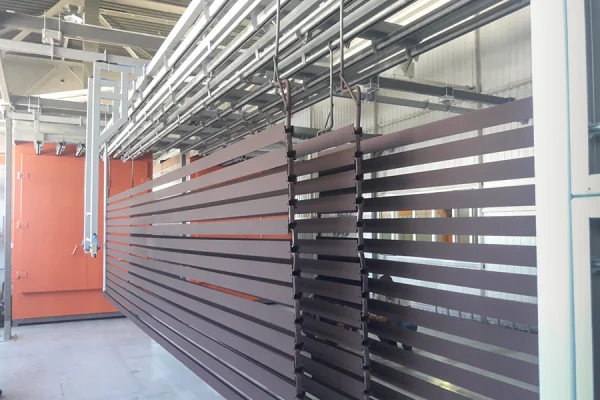
We strive to innovate when it comes to functionality. Our mission is to be the best, come and join the ride.

Each and every one of our customers receives personalised assistance from our dedicated support team.
Put your parts into production today
All information and uploads are secure and confidential.
Try Ya Ji Aluminum now, for free_
Frequently Asked Questions
Are you a manufacturer or a trading company?
We are an aluminum profile manufacturer. We provide extrusion, CNC machining and surface treatment services. You can view our company introduction video on Youtube:
How do you proceed with existing molds and new molds?
When we receive your project drawings or information, we will look for the same molds among our existing ones. We can give you free use without involving confidentiality agreements. You can check our aluminum radiator catalog to see if there are products that meet your project. When a new mold is needed, our engineering team will first communicate with you about possible suggestions for optimizing project costs.
Can I get a sample?
Yes, we are happy to provide you with samples so that you can check our production quality. The price of samples is free in most cases. Submit the form to contact our sales staff for detailed information.
How long does it take to get the sample?
If the sample is in stock, we can express it to you directly.
For customized heat sinks, extrusion production takes a little time, usually 20-30 days to complete.
If you open a new mold, how will you deal with the mold?
We will produce and preserve your molds according to your requirements, and provide mold maintenance and repair services for your subsequent use.
Packaging
Packaging can be customized according to your needs. Options include using protective film or paper to separate and protect the surface, or foam film for additional surface protection. Products can be palletized or packed into cartons, and the quantity per pallet or carton can be specified by the customer.
The standard packaging involves bundling several pieces together with plastic wrap and then securing them onto pallets. Any packaging requirements beyond the standard will be accommodated, and the associated costs will be clearly provided to the customer.
Delivery Time
Mold production typically takes 7 days. After the sample is confirmed, producing a full container load of 26 tons generally requires 14 days for extrusion alone. If surface treatment is required, an additional 3 days will be needed. For machining, extra time will be required depending on the complexity and volume of the machining work. The exact additional time for machining will be determined based on the specific processing requirements.
What file type of drawing do you accept?
What file type of drawing do you accept?
Aluminum Additional Processing: The Ultimate Guide
Tapping
Tapping is the process of creating internal threads within a drilled hole to accommodate screws or bolts. It typically involves using a tap tool that matches the desired thread size and standard. After drilling a hole to the correct diameter, the tap is driven into the hole using a tapping wrench or machine, cutting threads as it progresses. This process allows aluminum components to be securely fastened with threaded hardware without requiring additional inserts.
Drilling
Drilling involves creating precise cylindrical holes in aluminum using a drill bit and rotary cutting tool. The process starts with positioning the workpiece, selecting the appropriate bit size, and applying consistent feed pressure to achieve accurate depth and diameter. Drilled holes serve various purposes, including preparation for tapping, assembly alignment, or mounting.
Riveting
Riveting is a mechanical fastening process used to join two or more aluminum components permanently. It involves inserting a rivet through aligned holes in the parts and deforming one or both ends to hold them together. This can be done manually or with pneumatic rivet tools. Riveting provides a strong, vibration-resistant bond and is commonly used where welding or screws are not suitable.
Cutting
Cutting refers to the separation of aluminum profiles or sheets into specified lengths or shapes using saws, shears, or CNC machinery. Accurate cutting ensures components meet design dimensions and fit precisely in the final assembly. The method used depends on the thickness, tolerance requirements, and intended application.
Deburring
Deburring is the removal of sharp edges, burrs, and small imperfections left after machining, cutting, or drilling. It can be performed using hand tools, abrasive brushes, tumblers, or specialized machines. This process improves safety, reduces wear on mating parts, and prepares the surface for subsequent treatments such as coating or assembly.
Assembly
Assembly involves joining multiple components into a complete unit using mechanical fasteners, adhesives, or interlocking features. This step may include tasks such as aligning parts, inserting connectors, and securing joints. Proper assembly ensures structural integrity, dimensional accuracy, and functionality of the final product.
Welding
Welding is a process that joins aluminum parts by melting the base materials and optionally a filler material to create a solid, continuous joint. Common methods for aluminum include TIG and MIG welding. The process requires surface cleaning, precise heat control, and proper technique to ensure strong, defect-free welds suitable for structural or load-bearing applications.
Bending
Bending involves deforming aluminum profiles or sheets into specific angles or curves without cracking or breaking. This is achieved using press brakes, rollers, or manual tools, depending on the complexity and radius of the bend. Bending is used to form components that match the required geometry in assemblies, enclosures, or structural frames.
Stamping / Punching
Stamping and punching are metal forming processes that use dies and presses to cut or shape aluminum by applying high pressure. Punching removes material to create holes or slots, while stamping may form embossed features, flanges, or indentations. These processes enable high-speed, repeatable production of components with consistent dimensions.