
Aluminum CNC Machining Services
Ya Ji Aluminum provides efficient CNC machining solutions tailored for your aluminum parts, taking into account both demand and production cost control.
- Available in a variety of finishes
- Extra Processing Available (Extrusion, Stamping, etc.)
- ±0.02mm tolerance
- Delivery in as little as 5 days.
- All Uploads are Secure and Confidential
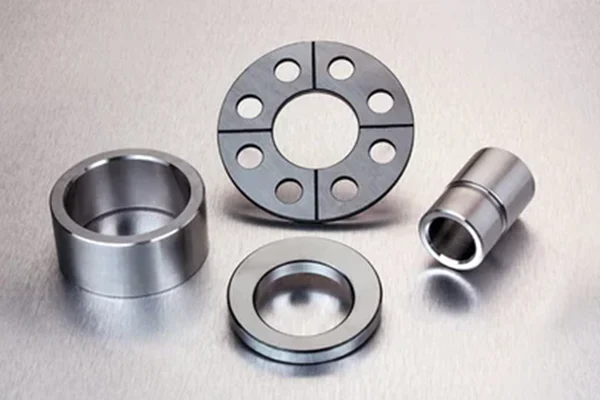
CNC Machining Services for Aluminum Parts
Ya Ji Aluminum boasts 30 years of experience in aluminum component machining, providing reliable support at every stage of a project. We offer technical assessments, competitive pricing, accurate delivery, and clear communication.
We are proficient in the machining properties of various aluminum alloys, capable of handling the challenges of complex CNC-machined parts, ensuring strict tolerance control, and can provide additional extrusion and surface treatment services. Welcome to our precision CNC machining services and become our next satisfied customer.

CNC Milling
CNC milling machine processes parts by fixing the material or workpiece to the bed. Aluminum products can be processed from different directions and angles

CNC Turning
The tool removes material by contacting the rotating workpiece. Manufacture high-precision cylindrical, conical and other rotationally symmetrical parts

Extrusion & CNC
For projects suitable for extrusion production, combine CNC machining to complete further processing needs and reduce project costs
Click the button to jump to view our aluminum CNC service details
Machining Tolerances and Standards
We deliver CNC-machined parts with standard tolerances at highly competitive prices. Unless otherwise specified in our quotation, we aim to achieve the tolerance levels outlined below, which may vary depending on the selected manufacturing process.
During product design, proper dimensional accuracy control is essential to ensure reliable assembly. If you have any questions about tolerance selection or accuracy requirements, please refer to our tolerance design guide or contact us at any time.
| Item | CNC Milling | CNC Turning |
|---|---|---|
| Maximum Part Size | 1300 mm 50 in. |
200×500 mm 7.9×19.7 in. |
| Minimum Part Size | 2 mm 0.08 in. |
2 mm 0.08 in. |
| Minimum Feature Size | Φ 0.30 mm Φ 0.01 in. |
Φ 0.30 mm Φ 0.01 in. |
| Dimensional Tolerance by Length |
• 0–12 in (0–300 mm): ±0.005 in (0.125 mm), Angle ±0.5° • 12–24 in (300–600 mm): ±0.010 in (0.250 mm), Angle ±0.5° • 24–36 in (600–900 mm): +1/64 in (0.016 in / 0.400 mm), Angle ±1° • 36–60 in (900–1500 mm): ±1/32 in (0.031 in), Angle ±1° • >60 in (1500+ mm): ±1/16 in (0.063 in), Angle ±1° |
|
| Edge Condition | *Sharp corners will be automatically broken (chamfer or radius). Size must be specified in drawings. | |
| Threads and Tapped Holes |
Φ 1.5–5 mm, depth: 3×D Φ ≥5 mm, depth: 4–6×D *Custom thread sizes supported |
Φ 1.5–5 mm, depth: 3×D Φ ≥5 mm, depth: 4–6×D *Custom thread sizes supported |
| Text |
Min. width 0.5 mm, depth 0.1 mm Supports CNC engraving / laser marking |
Laser marking supported |
One-Stop CNC Machining Parts Supplier
CNC machining is an ideal manufacturing process whether you need a few parts or 10000+ units as end-used production parts. Here are the custom CNC services available at Ya Ji Aluminum.

Rapid Prototyping
From Ya Ji Aluminum, you can get your Aluminum CNC machined prototypes done in days, super shot lead times allows you to verify the design fast.
- Instant quotes
- Instant DFM feedback
- Excellent quality
- Short lead time

Low-volume Manufacturing
For low-volume and small-batch needs, CNC machining offers a cost-effective solution with stable quality—ideal for quantities from a few units to around hundreds.
- Lower production cost
- Production-grade quality
- Short and predictable lead times
- Suitable for market testing before scaling

Mass Production
When your design is ready for full production, our CNC machining capabilities support reliable, repeatable manufacturing for ongoing orders and larger volumes.
- DFM optimization by experienced engineers
- Dedicated project manager
- Inspection (FAI) support
- Consistent, controlled production quality
Common Aluminium Alloy for CNC Machining
We provide a wide range of aluminum alloy CNC machining solutions tailored to diverse application requirements, ensuring optimal material selection, manufacturing efficiency, and performance for your product.
Aluminium 6061
Al–Mg–Si
6061 aluminum is one of the most versatile alloys used in CNC machining. It offers an excellent balance of strength, machinability, and corrosion resistance. In CNC machining, 6061 is ideal for structural components, brackets, and housings that require both precision and moderate strength.
Aluminium 6063
Al–Mg–Si
6063 aluminum provides excellent extrudability, smooth surface appearance, and good ductility. It is softer and easier to form compared to 6061, enabling complex shapes and fine details. Widely used in architectural frames, decorative parts, and general structural profiles requiring aesthetic quality.
Aluminium 6082
Al–Mg–Si
6082 aluminum is a high-strength alloy widely used in Europe as a substitute for 6061. It provides higher mechanical strength and better resistance to stress corrosion cracking, while remaining machinable. Ideal for CNC-machined precision parts, structural components, and load-bearing industrial applications.
Aluminium 7075
Al–Zn–Mg–Cu
7075 aluminum is a high-strength aerospace-grade alloy with outstanding hardness and fatigue resistance. It offers one of the highest strength-to-weight ratios among aluminum alloys. Commonly used for CNC-machined aerospace fittings, high-performance components, and molds requiring excellent durability and dimensional stability.
Aluminum CNC Machining Capabilities
Aluminum CNC machining offers exceptional precision and repeatability.
CNC Milling
Enables multi-axis contouring of aluminum profiles, perfect for pockets, slots, and intricate surface features.
CNC Turning
Ideal for cylindrical aluminum components, CNC turning offers high-speed, accurate outer and inner diameter shaping.

CNC Drlling
Precise hole-making on aluminum parts with tight tolerances and consistent depth control for complex assemblies.

CNC Grinding
Delivers high-precision surface finishing for aluminum parts, improving flatness, roughness, and dimensional accuracy.
Aluminum CNC Machining Surface Finishes Options
Looking for the right finish for your aluminum CNC machining project? Choose from over 12 options to meet your functional and aesthetic needs.

As Machined
Standard finish, surface roughness of 3.2 μm (126 μin), removes sharp edges and deburs parts cleanly.

Anodizing
Use electrolytic oxidation technology to enhance the corrosion resistance, oxidation resistance and color

Hard Anodizing
Enhanced hardness and wear resistance, providing stronger surface protection

Sandblasting
Treat a surface with sand or other particles to create a uniform rough texture
Powder Coating
Electrostatically applied powder creates an even, durable coating

Electrophoresis
Coating aluminum surface with electrophoretic coating, uniform and strong protective film

Electroplating
Electroplating metal coatings onto aluminum surfaces to enhance conductivity and aesthetics

Polishing
Improve gloss, remove surface irregularities, and create a smooth surface

Brushing
Creates a fine texture effect by brushing the surface, often used on metal materials

Laser Engraving
Use laser to etch the surface with high precision, often used for logos and patterns

Silk Screen Printing
Transfer the ink to the surface through the screen for pattern and text identification

Wood Grain Transfer
Thermal transfer technology transfers wood grain patterns to aluminum or plastic surfaces to simulate wood texture
Design Guide
Read our helpful guides to optimize your designs and production efficiency. Our engineers provide instant feedback to ensure the best results for your aluminum CNC machining projects.
View CNC component design guide >>
| Feature | Explanation |
|---|---|
| Part size | Machined parts are limited in size by the machine envelope. 3-axis machines typically have a larger build size than multi-axis machines. |
| Feature alignment | For 3-axis machining, it costs more to add features to multiple faces. It can therefore help to design parts with holes and other features aligned on a single face. |
| Fillets | Internal fillets should be as large as possible to allow a large-diameter tool to be used. The radius of the internal fillet should be greater than 1/3 the cavity depth to prevent tool damage. |
| Wall thickness | Metal parts typically require a minimum wall thickness of 0.8 mm, while plastic parts require 1.5 mm. Thinner walls are vulnerable to vibration and deformation. |
| Cavity depth | To minimize chatter, tool deflection, and other issues, the depth of machined cavities should be no more than 4x the width. |
| Holes and threads | Hole and thread diameters should correspond to standard drill bits and threading tools. Hole depth should generally be no more than 10x the diameter. |
| Undercuts | T-slot undercuts can be around 3–40 mm wide. Dovetail undercuts work best at a standard angle of 45 or 60 degrees. |
Quality Control and Inspection
We implement rigorous quality controls at every stage of CNC machining to ensure that each aluminum component meets specifications. From material verification to dimensional accuracy checks and surface inspections, our team delivers reliable, defect-free parts.

All machined aluminum parts are measured using calipers, micrometers, and CMM to ensure tight dimensional tolerances.

We use profilometers to verify surface finish quality, ensuring smoothness meets drawing or functional requirements.

Each batch of aluminum is inspected with material reports and chemical analysis to confirm alloy grade and traceability.

Trained inspectors check for surface flaws, tool marks, and machining defects before packaging and final delivery.
Start Your Project Today!
Experience a streamlined and efficient collaboration process with our dedicated team, delivering high-quality precision parts tailored to your needs.
1. Submit Inquiry Form
Submit an inquiry through our website or contact us directly with your project requirements, design specifications, and any special requests.
2. Receive Quotation
We will provide a detailed quotation including costs, timelines, and deliverables. Review the quote and approve it to move forward.
3. Production and Quality Assurance
Our team will begin manufacturing your parts, ensuring high-quality standards with rigorous inspections throughout the process. You will receive updates on the progress.
4. Delivery and Support
Your parts will be securely packaged and shipped to your location. After delivery, our team remains available for any support or additional requirements you may have.


Start A New Quote
STEP | STP | SLDPRT | IPT | DWG | PRT | SAT files
All uploads are secure and confidential.
Aluminum extrusion, CNC milling, CNC turning, sheet metal bending, surface treatment, etc.

Frequently Asked Questions
Are you a manufacturer or a trading company?
We are an aluminum profile manufacturer. We provide extrusion, CNC machining and surface treatment services. You can view our company introduction video on Youtube:
How do you proceed with existing molds and new molds?
When we receive your project drawings or information, we will look for the same molds among our existing ones. We can give you free use without involving confidentiality agreements. You can check our aluminum radiator catalog to see if there are products that meet your project. When a new mold is needed, our engineering team will first communicate with you about possible suggestions for optimizing project costs.
Can I get a sample?
Yes, we are happy to provide you with samples so that you can check our production quality. The price of samples is free in most cases. Submit the form to contact our sales staff for detailed information.
How long does it take to get the sample?
If the sample is in stock, we can express it to you directly.
For customized heat sinks, extrusion production takes a little time, usually 20-30 days to complete.
If you open a new mold, how will you deal with the mold?
We will produce and preserve your molds according to your requirements, and provide mold maintenance and repair services for your subsequent use.
Packaging
Packaging can be customized according to your needs. Options include using protective film or paper to separate and protect the surface, or foam film for additional surface protection. Products can be palletized or packed into cartons, and the quantity per pallet or carton can be specified by the customer.
The standard packaging involves bundling several pieces together with plastic wrap and then securing them onto pallets. Any packaging requirements beyond the standard will be accommodated, and the associated costs will be clearly provided to the customer.
Delivery Time
Mold production typically takes 7 days. After the sample is confirmed, producing a full container load of 26 tons generally requires 14 days for extrusion alone. If surface treatment is required, an additional 3 days will be needed. For machining, extra time will be required depending on the complexity and volume of the machining work. The exact additional time for machining will be determined based on the specific processing requirements.
Aluminum CNC Machining: The Ultimate Guide
- What is Aluminum CNC Machining?
- How Does Aluminum CNC Machining Work?
- Benefits of Using Aluminum in CNC Machining
- Common Aluminum Alloys Used in CNC
- Core CNC Processes for Aluminum Parts
- Surface Finishes for CNC Aluminum Components
- Tolerances and Accuracy in Aluminum CNC Machining
- Post-Machining Treatments for Aluminum
- Design Guidelines for Machined Aluminum Parts
- Key Applications of CNC Machined Aluminum
- Selecting the Right CNC Machining Partner
What is Aluminum CNC Machining?
Aluminum CNC machining is a subtractive manufacturing process that uses computer numerical control (CNC) machines to produce precise aluminum parts from solid material. By milling, turning, drilling, and tapping, excess material is removed to create components with accurate dimensions, consistent quality, and repeatable performance.

Unlike forming processes such as extrusion or casting, aluminum CNC machining focuses on precision and flexibility. It allows complex geometries, tight tolerances, and detailed features to be manufactured directly from aluminum billets, plates, or profiles. This makes CNC machining suitable for both simple parts and highly complex designs.
One of the key advantages of aluminum CNC machining is the wide range of aluminum alloys available. Alloys such as 6061, 5052, 6063, 6082, and 7075 offer different combinations of strength, corrosion resistance, machinability, and surface finish, enabling engineers to select the most suitable material for each application.
Aluminum CNC machining is commonly used for prototyping, low-volume production, and end-use parts across industries including aerospace, automotive, electronics, medical devices, and industrial equipment. Its ability to deliver fast turnaround, high accuracy, and production-grade quality makes it a reliable manufacturing solution throughout the entire product development cycle.
How Does Aluminum CNC Machining Work?
Aluminum CNC machining works by removing material from solid aluminum stock using computer-controlled cutting tools. The process begins with a digital CAD model, which defines the part geometry, dimensions, and tolerances. This model is converted into CNC instructions (G-code) that guide the machine’s movements with high precision.
The aluminum material—such as a billet, plate, or extrusion—is securely fixed on the CNC machine. Depending on the part design, operations may include milling, turning, drilling, tapping, and contouring. Multi-axis CNC machines allow complex features to be machined from multiple angles without repositioning the part, improving accuracy and efficiency.
During machining, cutting tools rotate at controlled speeds while the machine precisely moves along programmed paths. Aluminum’s good machinability allows for smooth chip removal, stable cutting conditions, and fine surface finishes. Coolants or compressed air are often used to manage heat, extend tool life, and maintain dimensional accuracy.
After machining, parts may undergo inspection to verify dimensions and tolerances. Secondary processes such as deburring, anodizing, or surface finishing can then be applied to meet functional and aesthetic requirements. This controlled, repeatable workflow enables aluminum CNC machining to produce high-quality parts for prototypes, small batches, and production runs.

Benefits of Using Aluminum in CNC Machining
Aluminum is favored in CNC machining because it offers a strong combination of low density, good corrosion resistance, and excellent thermal conductivity. It is easier to cut than harder metals, resulting in faster cycles and less tool wear.
The material is also compatible with multiple surface finishes like anodizing and powder coating, enabling both functional and aesthetic enhancements. Its strength-to-weight ratio makes it suitable for structural and precision components alike.
Common Aluminum Alloys Used in CNC
Different grades of aluminum suit different machining needs. 6061 is a popular choice for its strength and versatility, while 7075 is preferred in aerospace for its high tensile strength. 6063 and 6082 are often used for profiles and structural parts.
Choosing the right alloy depends on factors like required strength, corrosion resistance, thermal properties, and ease of machining. Understanding alloy behavior helps optimize performance and cost.
Core CNC Processes for Aluminum Parts
CNC milling, turning, drilling, and grinding are standard processes for shaping aluminum. Milling is used for creating flat surfaces, pockets, and contours, while turning is ideal for cylindrical components.
High-speed CNC machines can achieve tight tolerances and complex geometries in a single setup. Advanced 3-axis and 5-axis systems enable efficient machining from multiple directions, reducing labor and errors.
Surface Finishes for CNC Aluminum Components
After machining, aluminum parts can receive various finishes such as anodizing, powder coating, polishing, or sandblasting. These finishes improve corrosion resistance, appearance, or tactile feel.
For example, anodizing not only adds color but also creates a hard, wear-resistant oxide layer. Finishes can be tailored for technical needs or branding, depending on the product’s end use.
CNC machining offers exceptional precision, with tolerances as tight as ±0.01mm depending on machine and part design. This ensures high consistency across production runs.
Maintaining dimensional accuracy is critical in sectors like aerospace and medical, where even small deviations can cause failure. Quality control systems such as CMM and visual inspection are used to verify tolerances.


Post-Machining Treatments for Aluminum
After machining, parts often undergo secondary treatments such as deburring, surface cleaning, and heat treatment. These steps ensure that components meet performance and safety standards.
Anodizing and coating improve corrosion resistance and durability, while stress relief heat treatments can enhance structural integrity. Proper post-processing extends product life and enhances functionality.
Effective design minimizes sharp corners, thin walls, and deep cavities that are difficult or expensive to machine. Fillets, proper hole spacing, and standard tolerances help reduce production cost and tool wear.
Collaborating with machinists during the design phase ensures that your part is optimized for CNC production. It also improves manufacturing efficiency and reduces lead time.


Key Applications of CNC Machined Aluminum
CNC-machined aluminum parts are used in diverse applications—from aerospace brackets and automotive frames to medical enclosures and consumer electronics housings.
The metal’s lightweight and conductive properties also make it ideal for heat sinks and electrical enclosures. Its versatility supports both functional and decorative use cases across industries.
Selecting the Right CNC Machining Partner
When choosing a supplier, look for experience with aluminum grades, precision equipment, and thorough inspection procedures. A good partner should offer prototyping, batch production, and post-processing services.
Evaluate their certifications, turnaround time, and ability to handle complex geometries. Clear communication and design support are also key to long-term collaboration and successful projects.